Saturday, May 28, 2011

Visit Aosta! "Rustic Food and Wine" Tour in October 2011

I can't believe I haven't written about this yet!  I've got a real treat for anyone who ever wanted to do a food & wine tour of the Italian Alps, because I am running one this coming October, along with Asheville chef Mark Rosenstein! I've been enamored with my new home of Aosta, Italy since I first came here to visit my now-husband 4 years ago, and even more now that I'm a resident here.  It has always amazed me how there aren't more tourists here (aside from ski tourism), because it is such an incredible place, rich in beauty, food, wine, and castles.  One of the things I like is that there aren't a load of tourists, because it means Aosta hasn't 'sold out' for tourists, but I don't think that bringing a small group of folks here will hurt that!  Anyhow, it occurred to me that others would likely fall in love with Aosta as well, so I've been working to put together this tour of an undiscovered gem of a travel destination.

The basic facts: 
Name: "Battle of the Queens: Rustic Foods & Wines of the Italian Alps"
Date: October 22-29, 2011
Website: http://www.thefrenchbroad.com/classes/battle-of-the-queens-aosta-italy
Cost: $2400 (double occupancy), includes 7 nights accommodation, 7 breakfasts, 5 lunches, 7 dinners, all group activities, transportation within the tour.  Does not include transportation to Aosta.
Maximum # of Guests: 8  (we will hold an additional week, October 15-21, if this week fills up)
Guides: Mark Roseinstein & Annie Erbsen
Nearest Airport: Torino, Italy

Schedule (from website):


Mark Rosenstein, chef, author, restauranteur and world traveler is pairing up with Annie Erbsen, musician, cook, Alpine guide, Aosta, Italy  resident and Asheville native to conduct a tour of the Alpine region of Northern Italy in October, 2011.
7 nights accommodations at the restored Maison Colombot – once the town’s post office dating from 1715, located in the historic Roman center of  Aosta, Italy.
Arrive Saturday for an evening’s social in the center of town for a traditional Valdostano dinner.
Sunday morning Annie leads a walking tour of the historic Roman Aosta and a light lunch, including some of Italy’s best gelato!  In the afternoon experience an authentic Alpine celebration, the exciting “Battles of the Queens”  finals in the “cow dome” of Aosta.  Picnic with our friends as the cows duel to determine the Queen of the Valle d’Aosta.  In the evening, indulge your appetite: dinner with an Italian ‘nonna’ – prepared from seasonal ingredients paired with the wines and cheeses of the region.  Learn the folklore and local stories of this mountain community.
Monday we hike the forest, hunting wild chestnuts – in preparation for the evenings ‘Castagnata’ – a chestnut party.  In the afternoon, a visit to La Chévre Heureuse (The Happy Goat), one of the best dairies in the Aosta Valley.  Owners Ruben & Roberta will tour us around the farm and the cheese aging caves, introduce us to their herds,lead a cheese tasting, and teach a cheese making lesson.  During the tasting, we’ll see if we can distinguish the terrior of Aosta.  Weather permitting, we’ll finish the afternoon with a hike to the edge of the near-by glacier, topping out at over 1600 meters (optional).  This evening, Mark lights up the fire pit and grills, pairing the luciousness of wood-fired cooking with the magic of Alpine air (aided of course by the robust wines of the region).  Afterwards, a lesson in roasting chestnuts, making Mont Blanc (the dessert, not the writing instrument), music and general merriment – dancing is allowed.
Tuesday we set you free for the morning in Aosta, to discover the area on your own.  We will challenge you to bring something to lunch you found or bought in the town and tell the story of who you met.  We will meet in one of the local bars for lunch.  In the afternoon, a visit to Cave du Vin Blanc de Morgex et La Salle – Europe’s highest vineyard.  Fortified by the bracing and mineral-mountain sharp wine, a short hike through the vineyards, while learning the history and method of making ‘ice-wine’.  For dinner, La Jolie Bergere – a beautiful agritorismo very high up in the mountains – a meal of traditional foods with wine made on property.  If you like, some additional walks around the property.
Wednesday is a big day – we will meet Cobra – the reigning Cow Queen the past two years!  Her home, at La Borettaz, also has the world-famous raw-milk vending machine, as well as other dairy vending machines.  Imagine, Reblec, Fontina & Seras instead of Coke or Pepsi. Maybe there is also a wine vending machine around, if not, we’ll find some at one of  nearby vineyards, such as Cave des Onze.  After saying goodbye to the Queen, we hike to Pondel, a 2000-years old aqueduct.  A picnic lunch, followed by a grappa & local liquor tasting inside the aqueduct.  The afternoon will be set aside for ‘recovery’ – a day at the spa – Terme de Pre Saint Didier, which is a natural hot springs at the foot of the other Mont Blanc (the tallest mountain in Europe).  We can arrange for massage, facials, saunas, mud baths or what ever is your pleasure.  While Annie leads you to the spa, Mark will ‘hang back’ and prepare an “Italian Spa” dinner upon your return.  Dinner will be preceded by a short cooking lesson – one about healthy cooking.
Now recovered from hiking and grappa, on Thursday morning, we charge ahead to La Vrille – one of the most exceptional farm-to-table and Slow Food certified restaurants in the region.  They also make one of the coveted top 100 wines of Italy.  We will tour their farm, garden and vineyards as well as take a seasonal cooking lesson from Chef Luciana, who has twice been voted Italy’s “Best Chef”!  Incorporating local herbs in her cuisine is one of her hallmarks.  In the afternoon, a hike to Fenis Castle, a meticulously restored showpiece and one of the largest of the Aosta region.  For dinner, we return to La Vrille for dinner, which Annie promises “will likely be the best meal of the week (and to be honest, of many lives!).
Friday will continue on with the gastronomic theme of the week – visiting a local enoteca for a ‘smelling test’ and wine tasting with certified sommeliers.  A light lunch is in order, we’ll set you free in town.  In the afternoon, our friends Massimo and Angelo will teach you about making toppings for polenta (carbonata, fonduta, porcini mushroom, beef ragu) as a prelude to the evening’s Polenta Party.  Cooked in the traditional fashion over wood-fire, we will be joined by our local friends for food, music and dancing.  At the end of the evening, safely back to the hotel, we say “arrivederci”.
Saturday morning is check out.


Registration is currently open! Let me know if you have any questions.  It should be a terrific week, not to be missed!

Sunday, April 10, 2011

The Hunt for Edible Things in the Cowfield

The field around my house
Yesterday, I was de-rooting some barbaboch (an Italian grass-like herb that I have recently become addicted to) in the back yard when my upstairs neighbor Betti starts asking me what I am doing.  She is a spunky lady who is probably in her early sixties, and as of this week my new best friend.  We are always trading things we have canned back and forth, and she gives us gardening advice.  So, she starts asking me if I picked it, and when I told her that I actually bought it, she told me it grows in the fields surrounding our house, along with a plethora of other edible goodies.  We decide to go out into the cow fields surrounding our house (we live downstairs, her and her partner upstairs), so that she can teach me about the wild vegetable garden literally at my doorstep.  This is what we found (and picked!):


Betti doesn't know the name of it, but has picked it all her life.  It grows in bunches with an inedible plant that looks almost identical.  It is delicious chopped up and steamed.  Tastes a little bit like chard.  When it blooms it gets these little bubble things that are fun to pop!


Wild rocket.  I have only ever had the domestic kind, and I have been a long time fan of this spicy salad.  This is pretty similar, but is spicier and more bitter. 

Dandelion Greens.  Ok, I admit this one isn't new to me, and I eat them all the time.  Or at least, since arriving in Italy I have! It is delicious in a raw salad when the shoots are under an inch tall, and once they are grown they are great, although quite bitter, when cooked.  I like to make fritata with a big bunch of this inside!

Barbaboch (aka barbabuc, barbabecco, agretti, etc).  Not sure what this is called in English, but it is my new favorite food.  I had recently discovered its cousin by the same name, which is much smaller, but this might be even better.  It is divine when cooked down with a little bit of oil and lemon juice. I am addicted!
Wild Garlic.  Looks a bit like those stinky wild onions but isn't.  Today I had it chopped up mixed in with a salad of cherry tomatoes, basil, reserve balsamic, and hand pressed olive oil. Yummy!

My treasure picked from the cow field! I feel rich, indeed.

Saturday, April 2, 2011

Operation Cheese Making Part Something: I AM A CHEESE MAKING APPRENTINCE!

It's been a while since I've posted about my cheese adventures.  Ricotta salata, ricotta, queso blanco, panir, and cottage cheese have become a nearly daily operation, so that's quite good.

However, it all changed today.  As of today, I am a cheese apprentice, at La Chevre Heureuse.  It is a young couple who owns a farm literally on the top of a mountain, at 1600 meters, and they have somewhere between 40 and 80 goats (they aren't sure of the number at the moment), and about 5 cows.  The husband, Reuban, works with the animals, while the wife, Roberta, makes the cheese (Ok, they aren't technically married, as most Italians these days don't actually get married, but it's shorter to write husband/wife than what it actually is). This morning I headed up there at 8 am and had to pass through some pretty scary streets... not only roads that curve back on themselves every couple of meters, steep, snowy, narrow, and without guard rails (12 km of that!), the streets that passed through some of the villages along the way were precisely the same size as the car.  Luckily, I've learned to drive like an Italian, so that didn't present much of a problem.
Seriously narrow road!
I arrived, and was greeted by a couple of friendly dogs and a beautiful pet grey wolf.  I joined the family, including their two adorable small children, in their farmhouse for coffee before kicking off the day.  Reuban took off towards the barn, and I headed down to the cheese making room under the house.  Basically a room has metal work surfaces, a big sink, cheese drying area, and refrigerator, with a gas burner on the floor, on top of which was perched an enormous copper caldron of milk.  Specifically, a combo of freshly-milked goat and cow milk, after it had the rennet in it for an hour to get the gel set.  They do a lot of goat/cow mixes because you get the best of both worlds with that.  The tangy taste of the goat milk, but the added cow milk makes the curds easier to work with.  Goat milk curds are extremely delicate, and are basically a pain in the butt.
pet wolf 
This was my first time participating in 'real' cheese making, and I learned a lot.  One really cool thing is that when the goats & cows graze a lot once the grass and herbs start sprouting (since they live at such a high, snowy altitute, they have to keep the animals in much of the year), the unpasterized milk doesn't require any added cultures, because it has them already in it from what they've been eating.  Also, the milk doesn't even really need rennet some of the time!  If you leave the raw milk sitting for a while, it'll gel itself and turn itself into curds without any additional work/ingredients to make that happen.  So basically, milk made from happy, mountain grazing animals=easy, tasty cheese.  Also, unless they want to do something different, they don't need to add bacteria to the cheese to make the rind, which is something pretty much everyone has to do.  Why don't they?  Because they have a cheese cave...not something called a cave, but an honest-to-God cave...that has all the right bacteria floating around.  The cheese rounds dry out for a day, then are put in the fridge for 2 days, and then put in the cave, where the get infused with the right strains of Penicillium and other important bacterium to make the fresh cheese turn into aged cheese.  So basically, they produce a limited selection of cheeses, because they are working with what their milk and cave is telling them.  Pretty cool, I think.

So, I got to help make tomini (little creamy fresh cheeses that are great with jam), tometta (goat/cow mix that gets aged, and they often roll it in herbs. AMAZING), and robiola (fresh, mild cheese).  For the tomini, all I did was help put them into molds since the curds were ready, but I got to help with the tometta from the beginning.  That was the one that was in the big copper caldon. The rennet (and mesophilic culture, if using) have to sit for an hour or so in the warm milk, until the whole thing has turned to gel.  Then we cut the curds, and stirred it while it was heated to the right temperature, and then it had to sit for a while.  Until the right temp was reached, we had to be really careful to not break the curds while stirring.  Then, we spooned them into big molds, put big rock weights on top, and periodically flipped the cheeses in their molds.  After being flipped a few times, they are left until the next day with the weights on them, after which they are removed and put out to dry for a day.  Then the fridge for 48 hours, then the cave for 1-3 months.  Ta da! Cheese!

The robiola was pretty interesting.  The cultured/renneted milk is left to sit for a day in big tubs, and then it is gently spooned into molds.  After sitting in the molds for a couple of hours, the are weighted, and flipped like the others, and also dried out a little bit.  There are fresh and slightly aged versions of this cheese.  I got to bring home a fresh one :).

Robiola just scooped into the molds. 

Robiola fresh out of the mold
Roberta stirring the milk for the 'tometta' cheese

Tometta being pressed
 Other highlights:  the little 2 year old daughter came in and helped us make cheese,  she likes to run by and grab hot curds from the pot while we are stirring, and also to help put the weights on the cheese.  After we finished with the cheese, I helped muck out goat stalls, where I met someone working there who is a wood worker who is learning to play the fiddle.  We agreed to exchange woodworking (one of my other dreams!) for fiddle lessons.  We then all ate lunch together, and another local friend was there, Stefano.  He whipped up some pasta for everyone, and it turns out he is a Michelin Star chef and runs one of the best restaurants in the region.  I left with an invitation to come work there (that is another great adventure... will post about that at a later time), in addition to the open invitation to return to help with the cheese making whenever I want.  I'm digging the life as a food-making apprentice. 

Their fantastic house/barn/cheese making facility

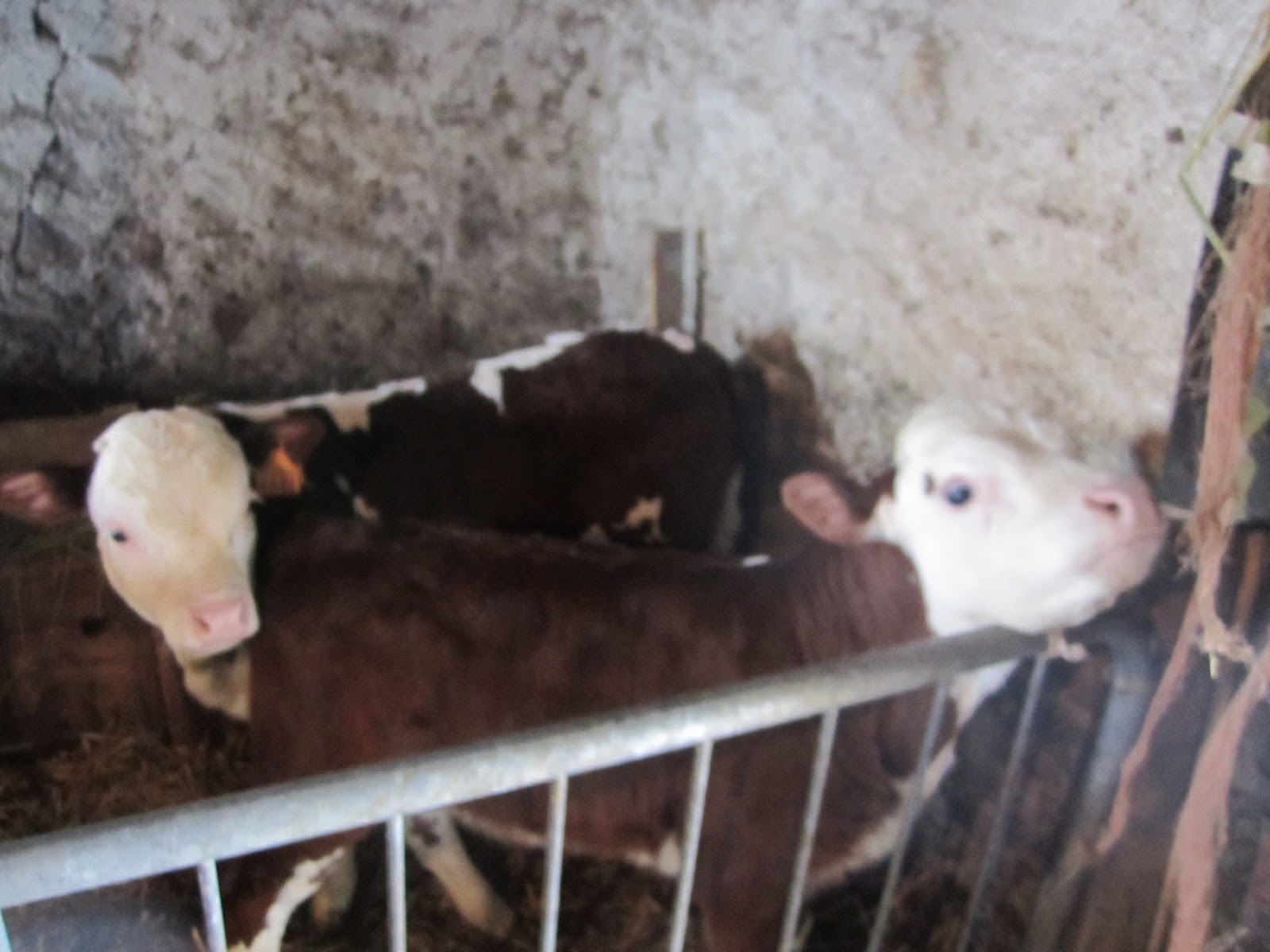
Baby cows! The closest one is a sweetheart, and licked my hand for 10 minutes.  The other one will probably be eaten...

Goats!

Tuesday, March 8, 2011

Used cowbells, sexy underpants on the street, and love graffiti

First, today is 'La Festa della Donna', which translates pretty much as 'Festival for Women'.  It's like mother's day but for all women.  The men are required (by which I mean that if they don't, they get bitch slapped) to buy the special women in their lives this particular kind of little yellow flower, which I don't know the name of.  Women traditionally get together and party without the men.  It's a pretty cool holiday, if you ask me!  I was listening to the radio in the car today about the history, and from what I gleened from half-listening to a fast-speaking Italian radio DJ, it's been going on 100 years, and is a day to remember the persecution and lack of rights women once had.

This was while I was driving through town, and I passed by the Tuesday market, so I stopped by.  Man oh man, I wish I had my camera with me so you can understand the hilarity of an Italian market.  See, in France, the markets are amazing because the farmers, cheesemakers, and winemakers come out and you buy their incredibly delicious home made goodies from them.  In Italy...well, it's more like a flea market.  The funniest part today was there was a table selling farm equipment, including used cowbells of various sizes.  See, cowbells are highly important here because there are a plethora of cows.  However, right next to the cowbell table was a sexy lingerie table.  There were mannequins dressed in sexy teddies and see-through thongs and a rack of  very very very risque under-things.  Actually, not underthings.  Sexy teddies and matching thongs.  Pretty much all see-through.  It was just pretty funny to me to have an old lady selling these overly risque lingerie on the street, next to used cowbells.  That's Italy for you!

Next on the agenda:  In every city, of every size, there is graffiti. Which, coincidentally, is the same word in Italian.  Of course we have some of your run-of-the-mill graffiti, where a stupid teenager scrawls something illegible to try to act like a bad-ass, but what we have most of is LOVE graffiti.  People declaring their everlasting, undying love for someone Including Aosta, where I live, and I have made a habit of taking photos of the particular sweet scrawlings on the walls. I was going to wait until I amassed a larger collection, as I've photographed only a tiny fraction, but here is something to get you started.
"Peace doesn't only say no war"
"And...I love you...how it is... I have never been in love with this/and...I love you, I love you truely/and...I love you, I love you I swear/and... I love you for my entire life/and...I love for your mistakes
"I LOVE YOU...forever...my darling!"
"Beautiful"

Saturday, January 29, 2011

Wine, Music, and Cheese IN A CAVE

This is my Italy.  Music & wine in strange locations.
There is a fabulous thing in Italy, really and truly magnificent.  It's called 'Cantine Aperte.'  It translates into English as 'open cantine.'  Generally, you pay a small amount as entrance (5-8 euros, depending on the event), they give you a glass, and you get to go buck wild tasting as many wines as you want in as many places as you want.  They also let you stuff yourself silly with traditional foods that are supplied aplenty, while listening to rollicking traditional music.  That's the general gist of it.

I'm a physicist, so let me provide you with this simple equation to make understanding easier:

Wine cellars opening doors+wine glass+food+music+good company=good time

This was the second one I've been to.  The first one was right before my wedding, and took place at all of the fancy-pants (AKA delicious) vineyards near my house.  The cool thing about this is they gave you a thing to hang your fancy-pants wine glass around your neck.
My darling Aunt demonstrating proper use of a wine glass at a Cantina Aperta

Now, this one I'm writing about today wasn't fancy-pants.  It was a big freakin' party in the streets of a small town called Donnas.  It's in the southern part of the valley, and a cute little town where they make really fantastic wine.  Donnas wine.  It costs a pretty penny in the US if you can manage to find it.  As one of the few fiddlers in the region and part of the traditional music scene here, I was lucky enough to get to play in one of the open cantines.  I think it might have actually been someone's personal wine cellar, I'm not really sure.  We hauled our instruments through the streets, and entered through the back door, with a special knock, to where a bunch of little Italian ladies were busily preparing  'Zuppa alla Valpellinense' (or if you prefer it patois, the regional dialect, 'Seupa a la Valpelinentze').  It is a funny sort of  cabbage soup that is topped with bread and Fontina cheese that is baked in the oven.  It's quite tasty.  They prepared huge sheets of it for the hundreds of wine-heads pouring through the door and milling in the streets.
Pans full of the cabbage-bread-Fontina soup ready to be eaten by pub crawlers
After eating and drinking an appropriate amount of local wine, we launched into playing.  There was another fiddler, upright bass, button accordion, piano accordion, mandolin, guitar, percussion, bagpipe, whistle, and my husband on the banjo.  We were squished together, quite literally, and I kept poking folks in the nose with my bow.  It was a little wine cellar with arched stone ceilings, and we were perched together wherever we could squeeze ourselves, while locals likewise squished themselves together while drinking vin brule (hot mulled wine).  It was a pretty great time.

 
All photos of us musicians squished together in a jolly manner, underground, amid wine and partygoers

However, we eventually decided to take the party elsewhere.  We played randomly in the streets, until we stumbled upon the best thing ever.  Seriously.

A cave.

Yes, a cave.  In the center of town.  It had an entrance a bit like any other building in an alley way, except it opened into a real cave.  I don't think it was dug out or anything, I think it was just there and they build this village around it, and others, thousands of years ago (not kidding...2000 years would be pretty accurate).  But this cave was way more awesome than your average cave.  It not only had hundreds of bottles of wine ready for everyone to drink, but some GIANT cheeses, waiting for us to eat.  Like, man-size cheeses.  Anyways, we marched in there, hopped up on some big rocks, and started playing our guts out amid the drunk and merry locals, man-sized-cheese, and endless bottles of wine.  It turns out that caves have incredible acoustics.
A giant cheese in the cave

Music, jolly Italians, cheese, wine, in a cave!
Not content to leave well-enough alone, I was recruited on the street to join a band that was in search for a fiddler.  They asked me if I played 'populare' music.  I translated that as 'pop' music, so I responded that I used to play in some classic rock and punk bands as a teenager.  They looked at me like I was a bit crazy.  They proceeded to start playing some music that sounded a bit like some kind of traditional music, and people started dancing what looked to be some kind of traditional dance.  It was simple enough, so I played along and jumped around while doing so, as I'm prone to do.  I found out later that 'populare' means traditional music.  Apparently they play traditional southern Italian music...so no wonder they thought I was a bit crazy when I told them I used to play in a punk band when they asked me if I played their music!

But, yes.  If you can go to a cantine aperte, do so.  Especially if you get to party in a cave. 

Monday, January 17, 2011

Battle of the Queens


It seems that most things in this lovely valley I live in revolve around cows.  The beloved Fontina that is eaten at every meal, the cows standing the the middle of the road blocking the traffic on the way to work, regional competions for leather workers who make very fine cow bell collars, metal workers who make special cow bells, a giant festival for when the cows come back down from the mountain at the end of the summer…. And the battle of the queens  (Bataille des Reines). 

Who are the queens, these strong females battling it out to become the queen of the entire region of Valle d’Aosta?  They are cows.  Not big fat stubborn women of the human variety, but rather of the bovine sort.  It is one of the biggest events of the year, held annually on the 4th weekend of October and countless people gather with ample food and wine to watch the top cows of the region literally battle it out in the annual finale.  There are about a dozen preliminary rounds in the preceeding months to establish which cows get to be in the big battle, before all of the eyes in the valley.  


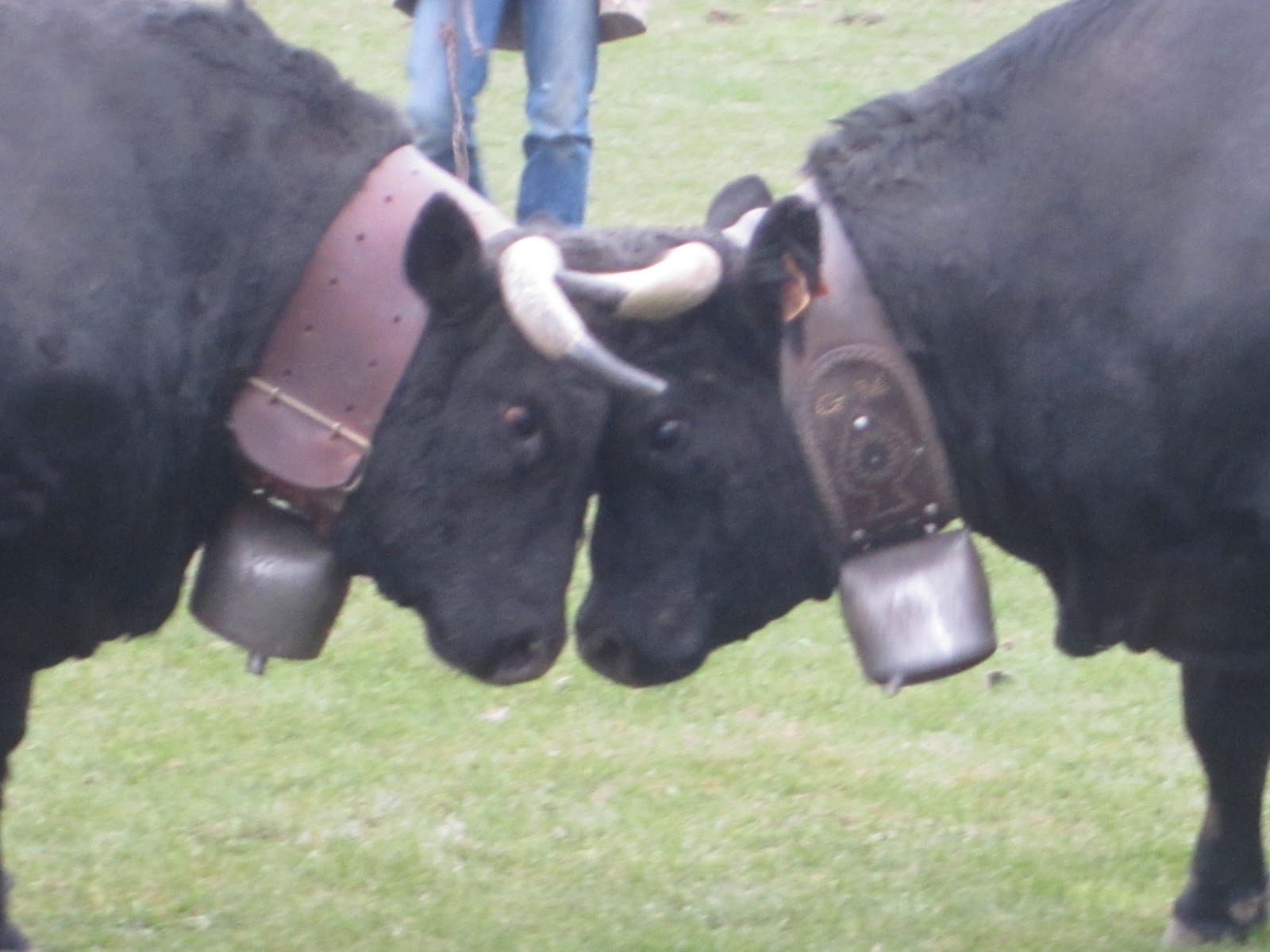
At first, I was very perplexed by this, and didn’t like the idea much.  I’ve been a vegetarian for nearly 20 years, and am firmly against the mistreatment of animals in any manner.  I thought  it sounded cruel, until I realized (by watching the cows in the pasture around my house) that this is just what female cows do on their own every day in every field, everywhere, to establish the pecking order.  They don’t hurt each other, but just butt heads and lock horns until one gets bored and runs away.  The remaining cow wins, and when she has battled it out with all the cows in her field, and they all wandered away before her, she becomes the top queen of the field.  This spectical is essentially establishing a pecking order for the entire region, and everyone wants to watch.  It is actually quite lucrative to have the winning cow; that cow instantly is worth a fortune, as is all of their offspring.   I am proud to say that the neighboring dairy (the one across the field that I get my cheese making milk from) has THE queen cow from both this year and last year.  So, my cheese is made from the milk of a queen!  Queen Cobra. I would personally be a little wary of milking her.  


(video I shot at the Bataille des Reines.  It's a fairly 'active' couple of minutes, and it represents the cow aspect of the event pretty well, I think.  Personally, I thought the people watching was way interesting.)

The whole event is really peculiar.  At the gates there are young women dressed in traditional Alpine clothing.  They sell decorated cow bells, local cheese, cheap beer, and cotton candy.  The thousand or so people have all brought copious amounts of food and drink, spread out in the hundreds of picnic tables overlooking the arena.  It is all pretty much traditional food.  Big rounds of darkened cheese, hunks of dark and dry bread, barrels and unmarked bottles of home made wine, piles of aged sausages, and even a big old half eaten hairy leg of what I presume to be a goat or pig... feet, fur, and all.  People are wrapped in blankets, holding a knife in one hand, a giant hunk of cheese in the other, with a bottle of wine beside them.  The leap up and cheer when their favorite cow wins, and look downtrodden with their cow runs or wanders away.  There are at least 5 different TV news stations covering the event.  Below the picnic area, there is the barn, where hundreds of beautiful brown cows are being lovingly coddled by their owners, or teenagers are sitting on their feed bins sneaking drinks of wine, and texting friends.   Some of the cows even have corporate sponsors, with the name of  the companies name engraved onto the cows’ decorative face plates.  Another strange aspect: the cows absolutely must be pregnant.  The explanation I have heard is that pregnant  cows are much less likely to get into a violent fight. 
The ladies resting up for the fight

Barrel of (likely) home made wine

Yes, that is a leg of a critter amid fontina cheese, wine, and grappa

Italians must have fresh, delicious coffee no matter where they are

homemade pickles, mocetta (salted meat), fontina cheese, and wine

blood sausage, cheese, and genepy (local homemade herbal liquor)
The arena is quite big, and it is made especially for this event.  The venue is called 'vaccodromo', which literally translates as 'cow dome'.  Also, Bob Dylan got to play second fiddle there, so to speak, when he performed there some years back.  My husband, having been to both the cow battles and the Bob Dylan concert, says that more people were at the last cow battle than at the concert.  These people have their priorities straight!
Look! Here come the Queens!

There are six cow battles going on at a time.  They put two cows near each other, with their owners nearby, and usually the cows stand around, chewing their cud, pooping, and occasionally pawing the ground.  At some point, after a few minutes or maybe even a half hour, one of the cows head butts the other, and they clash horns a bit.  One of them eventually gets tired of it, and scampers off.  Sometimes the winning cow goes running after it, and then the various owners and random observers, start chasing the cows around to prevent them from trampling people, which sometimes can take a good bit of time.  I often saw the owner of the losing cow kiss his beloved cow on the head, and give it friendly pats.  These men really love their cows. 

My mom was visiting at the time, and went with me.  She turned to me and said, ‘Annie, you live in a really strange place’.  It’s true, I do.  People gnaw on furry, hooved, goat legs while watching pregnant cows butt heads, in an isolated valley in the Alps.  I just love it!

Wednesday, December 29, 2010

My Second Winter: Musings about living here for more than a year

I've now been living in Italy for about 14 months... and I have to say that the reality of living here is different than I expected.  Some things are better, some are worse.  Some just, well, different.  I'm finding that I am much more homesick that I expected.  I have lived all over the place, in various parts of the world, but until now there was always an end point, like living in Asheville until I went to college, or living in Greensboro until I graduated college, living in Ireland until my visa expired, or living in Kentucky until I finished grad school.  Now that I am living in Italy and married, there is no 'end point', which I find to be fairly unsettling.  I love my husband and I love Italy, but I still get 'itchy feet'. 

I think I never got very homesick before because in the various places I have lived (or traveled to for extended periods), I always knew that I'd return to my family between each adventure.  Now, home is in the snowy Alps, and I am (probably) permanently on the other side of the globe from my family and lifelong friends.  To cope with this, I'm clinging to my Appalachian roots a lot more than I expected.  I play more Old Time music now than I ever did in the US, I'm always cooking southern food (pies, biscuits, cornbread, fried green tomatoes, roasted squash, etc), just made a patchwork quilt for a friend's baby, we are learning to brew beer at home because Italian beer generally tastes like poo, and I sometimes talk to myself in an empty house in a strong southern accent to keep myself company. 

That's not so say I haven't embraced the local culture, because I have.  I have a much deeper appreciation for wine than I ever did before, am enamored with the local cheeses (and am having some success making them myself), my favorite place in the world is inside the 2000 year old aqueduct up the road from here, and I can chat pretty well in Italian now.  I don't stand out as obviously as I did a year ago, and am learning how to maneuver my way through the Italian way of life. 


Things I like here
-Socializing generally revolves around food and cooking
-There are GIANT snow-capped mountains poking up everywhere.  Seriously, it is crazy.
-I can see glaciers from my kitchen
-Just about everyone can cook and they (nearly) all appreciate good, well made food
-Roman ruins absolutely everywhere, and the 2000 year old town I live outside of has 2000 year old walls surrounding it. 
-The pace of life is slower.  Things happen eventually, and people aren't rushing around like headless chickens
-There are still the small specialty shops.  Bread shops, pastry shops, meat shops, pasta shops, cheese shops, wine shops, chocolate shops...even shops that ONLY carry socks. 
-I can walk 5 minutes to get raw milk from the dairy vending machine.
-I can walk 2 minutes past to a great produce market where they grow much of what they sell. 
-The Italian language is beautiful
-The 'aperitivo'.  It translates as 'appetizer'... but it is so much better. Before dinner, when you go to a bar and get a glass of wine, they have a spread of tasty little appetizers that are included with your drink.  In the US, folks go out for a cup of joe.  Here, folks go out for an aperitivo. 
-FREE (or cheap, in some cases) medical care and medications!
-cheap public transportation exists in multiple forms, even if it isn't always reliable because the drivers are on strike what seems like half the time
-cobblestone pedestrian-only streets
-My giant rabbit, Genepy, who was saved from being cooked in a polenta sauce.  She weighs 6 kilos, and snores very loudly when she's not following me around like an imprinted duckling.

Things I don't like
-The Italian language is hard, especially when people talk fast, in dialect, strange accents, and use funny expressions
- If you have a prescription medicine, you must go every two weeks to the doctor to get a new prescription.  Even if it something you have to take for your whole life.  And then the Pharmacy probably doesn't have it because everyone is always on strike
-Bureaucracy.  I know it sucks everywhere, but here the laws change so often that no one (seriously! no one!) knows them even if it is their job.  Which means nothing ever gets done, and they end up doing funny things.  Like, I couldn't start working until my house was measured. 
-I don't know where to go to buy random things... like stickers, for example. 
-Ingredients are different.  If I want to make foreign food, like Mexican, I need to bring the ingredients from the US.  So I have a freezer full of masa harina, grits, cornmeal, and biscuit flour I hauled over since those things don't exist here. 
-Traveling ain't so easy when you live in a snowy, narrow valley in the middle of no where in the Alps
-I really, really miss my family... thank goodness for Skype, though.
-Most people want to eat my pet rabbit
-I feel like a baby because I don't have an innate knowledge of how to get anything done here, as I would in the US.  I want to sell jam and homemade cosmetics.  What offices do I need to go to so that I can start the process? Who knows!

It's a balance.  I love it here, but sometimes it annoys the living daylights out of me.  Overall, the balance is tipped in the direction of 'yippie, I love it here!', but it isn't always easy.  Life the past few months has been particularly crazy, as I stopped working as a medical physicist after only 6 months (contract issues... I was actually quite good at my job), and we are working towards running a B&B later this year.  It's one that someone we know already started years back, and needs someone to run it (me! me!).  I discovered that I have some kind of crazy natural born talent for jam and cosmetics (lotions, creams, etc) making that I will try to capitalize on.  My language skills are far better than a year ago; now I can talk to most people about most things, even if my grammar is...crappy.  It is dark and gloomy and snowy here, but I think we actually have far less snow than in the US at the moment, and snow is to be expected in the Alps, I suppose.  It's so strange... in the winter, the view literally looks like a black & white photo.  Everything is in shades of gray. 

Another thing...until a couple of years ago, dancing (lindy hop and contra dancing) were my life since about 2001.  I haven't hardly danced a step since I moved here, and it kind of feels like something has died inside of me as a result.  I still feel like a dancer, if though I don't really dance anymore.  However, upon realizing that, I bought myself a ticket to Barcelona for the New Year, so I am rocketing off tomorrow morning to dance for a few days! I also bought a pass for the European Swing Dance Championships in June (also in Barcelona), so that is another thing to look forward to. 

Oh, one thing I didn't mention above, but since it is Italy, it must be said.  The shoes here are gorgeous. 

Monday, December 27, 2010

Homemade Veggie Burgers! mmm....

 
There are a good few things I want to write about, but since a number of people have been asking me about this particular topic lately, I'll go with it!

A bit of background: I've been a vegetarian for 18 or 19 years now, and I take care to make sure that I have enough protein in my diet, as it can be easy for a veg to overlook.  A lot of vegetarians just grab for their jar of peanut butter (if they live in the US), a block of cheese, or a can of beans and call it a day.

But... why do that when you can make something that is more balanced, tasty, AND easy?  Veggie burgers are the staple of many veggie diets, but generally they are the type that are in a box in the frozen food isle.  Even if you go to a nice restaurant and order a veggie burger, it is...well, always from my experience....from a box in the freezer.  It never occurred to me that veggie burgers were something that normal people could make at home, until my husband got me a really great book, Veggie Burgers Every Which Way, by Lukas Volger. I have to admit, I am terrible about following recipes.  I generally just look at one to get inspiration, and then go my own way.  I followed some recipes in this book the first few times, but now that I just make 'em up as I go, and they turn out great.  I really do recommend this book, though.

A note on beans: Yeah, you can used canned beans, but they are generally loaded with preservatives and just aren't as tasty as the real thing.  The 'real thing' is easy, you just have to think of it in advance.  Before you go to bed, put some dried beans in a bowl, cover with water, and leave them there for 12 hours, plus or minus whatever time is convenient to you.  Rinse and then put in a pot and cover with fresh water and simmer til done.  Time will depend on the bean.  They are so much tastier this way.  And cheaper. 

Ok, so here is the 'Easy Bean Burger' recipe at the beginning of his book, slightly adapted.  It really is easy! And tasty! And versatile! You can also make them into tiny patties to put on a salad, which is fun.  And you can wrap up uncooked burgers and stick them in the freezer for up to 2 months. 


Easy Bean Burger
1 1/2 cups cooked beans
2 beaten eggs
1/2 cup roughly chopped fresh parsley
1/4 grated parmesan
2 teaspoons Dijon mustard
1/2 teaspoons salt
14 teaspoon freshly ground pepper
squeeze of fresh lemon juice
3/4 cup tasted bread crumbs (plus more if needed)
2 Tbs olive oil
(Optional tasty things to add in: chopped fresh sage, pesto, chopped sun dried tomatoes, chopped walnuts, etc)
**if you don't have all of these ingredients, don't worry.  The necessary ingredients are the beans, eggs, salt & pepper, bread crumbs, oil... but it is better with the other things.

-Preheat oven to 375 F
-Mash the beans in a bowl, and fold in all ingredients except for bread crumbs.  Then add bread crumbs, and add more if it is too loose.  It should be nice and wet.  Let sit for 5 minutes or so for the crumbs to soak up extra moisture.  Shape into 4 patties (or more, if you want mini burgers).
-In an oven safe skillet (like cast iron pan), heat oil over medium-high heat.  Add patties and cook until browned on each side, which should take 5-10 minutes total.  Transfer the pan to the oven and bake 12-15 minutes more until the burgers are firm and cooked through.  (if you don't have an oven safe skillet, cook over heat in whatever you have, and then cook in the oven on something that can go in the oven, like a cookie sheet or aluminum foil.

Serve however you want! I like to make my own buns (so easy! Get that book I told you about for the recipe.  Or just make normal bread, using half whole wheat, and form into balls, and use an eggwash to make seeds or whatever you want on top to stick) and also to make my own baked french fries and pickled red onions. 

Thursday, December 9, 2010

Operation: Cheese Making Part III

In addition to making those other tasty cheeses in previous posts (especially queso fresco...mmmm!), I've been working on two new cheeses!


Cheese #7: Molded Cheese Rounds

This is basically a farmer-style cheese, made into to little rounds.  Before trying them, I thought 'TOMINI!', but alas they were only tomini in form, although they were still tasty.  Tomini are a common cheese fresh around here, and I'm trying to find a recipe so I can make them, too.

Anyhow, this was my first cheese made using cultures.  For how much cheese is made around here, no one seems to have a clue as to where I can get cultures.  I think that the local cheese makers probably have their own cultures that they propagate, and most folks just don't make cheese at home anymore.  So, although I live in the land of cheese, I ordered my cheese making cultures from the UK. 

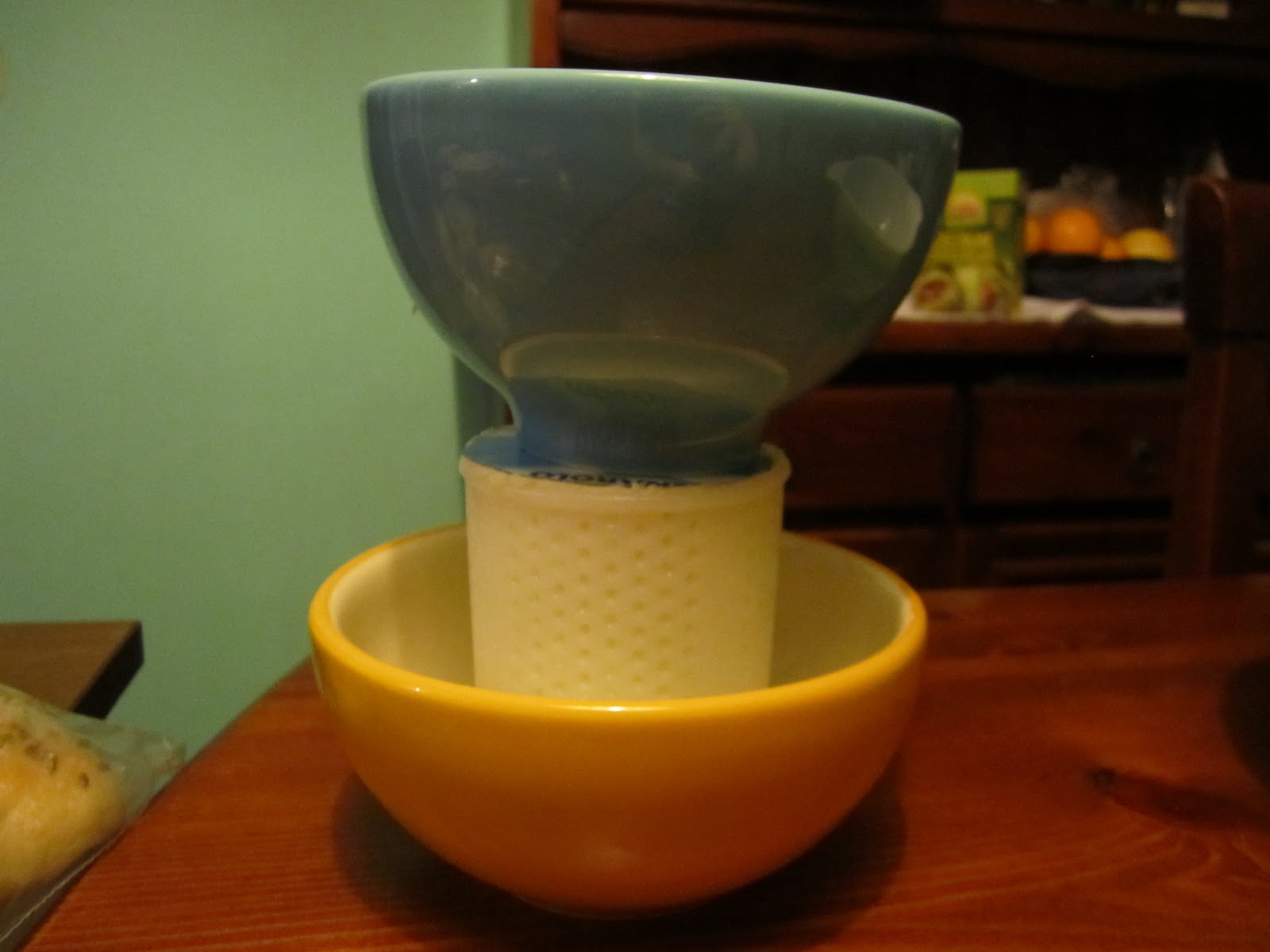
For this cheese, the ingredients were milk, a mesophilic (low temp) culture or buttermilk (which doesn't exist here), rennet, and salt.  The molds were made out of paper cups with holes punched in them, and it was pressed with other paper cups filled with water. 


 I was supposed to gradually heat the milk in a simmering double boiler removed from heat, but as I pasteurized the raw milk first and was too impatient to cool it and then reheat it, I just let it cool down to the right temperature. 
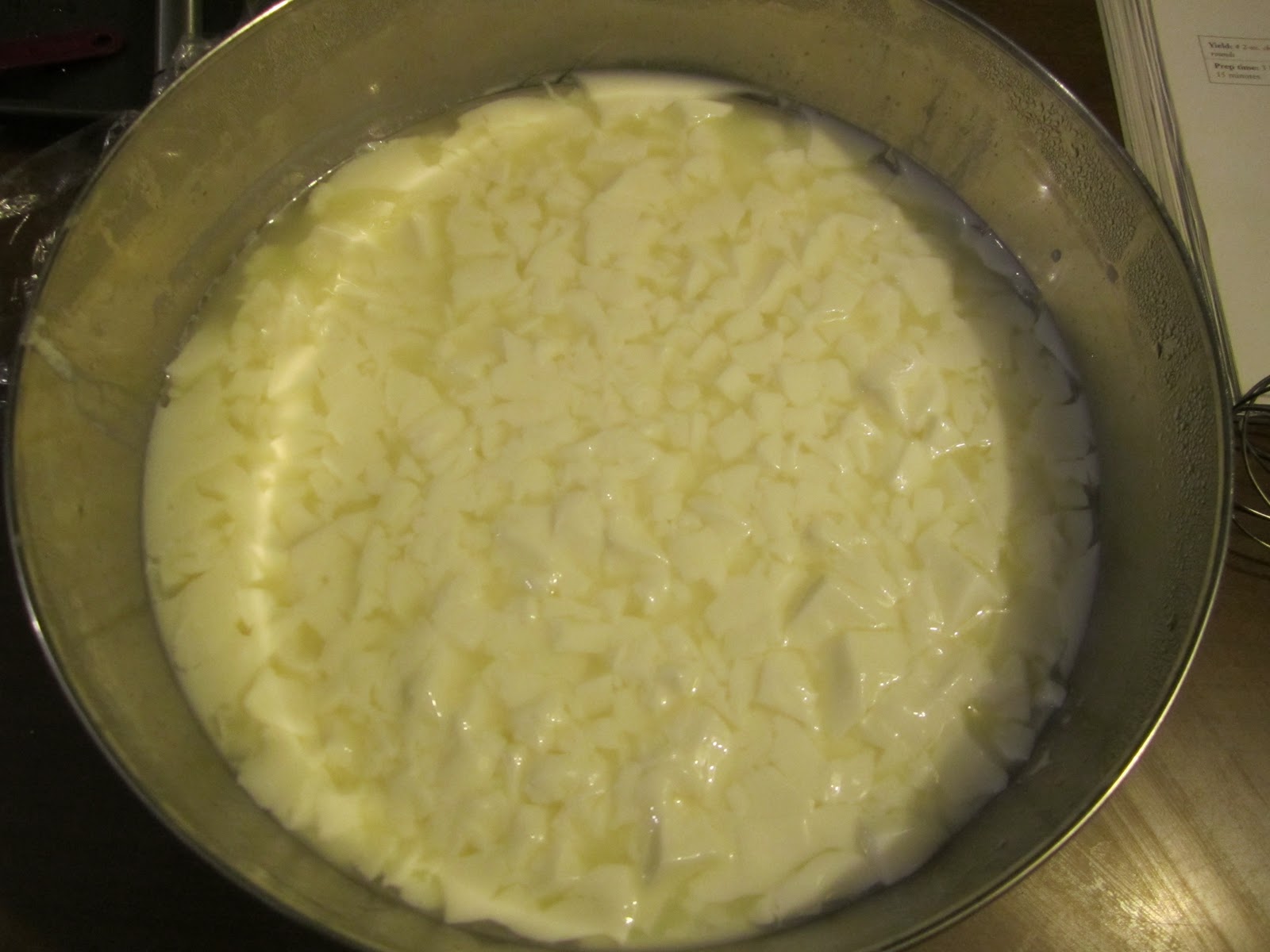
 I added the mesophilic starter, and had to let it sit for an hour.  It started smelling nice and cheesy after that! Then, I added the rennet and let it sit for another hour.  Then, the miracle happened.  So, SO cool.  The milk turned into a gel-like solid.  As if the whole thing turned to jell-o.  It was pretty darn awesome.  I cut the curd with a whisk, heated them back up, drained, salted, and then divided the curds up between the cups. I pressed the cheeses, turned them (hard to get those darn things out!!!), keeped pressing, turned, and left the little cheesy suckers overnight.


  Then I took them out, let them dry off a bit, and VOILA! Cheese! They are really tasty, especially with a little bit of just pressed olive oil mixed with a little bit of pesto drizzled on top.


 Cheese #8: Ricotta Salata

Ricotta Salata is basically pressed, molded, salted, and slightly aged ricotta.  There are different ways to make ricotta... directly from the whey after making mozzarella, milk added to whey, or just from milk.  Add acid, and you have ricotta curd, and strain in a cheesecloth.  Then you pack it all into a mold (I was lucky! I finally found one... the last one for sale!...in a farm shop at the bottom of my driveway), and press it.  I don't have real cheese presses yet, so I had to improvise.

See? Lovely cheese in it's mold.  I made the mistake of not sticking in in with some cheesecloth the first time, and it got stuck, so I learned my lesson and it's now living in cheesecloth in the mold.  As with the other molded cheese, it needs to be flipped in the mold a few times that first day.

 Out of the mold! Isn't is beautiful?  This is before it's salted every day for a week, and then aged for a month.  I just finished the last salt rub (I see why it is called salata, as it will be SALTY) yesterday, and need to wait for 1 to 3 weeks more before diggin' in.  I'll let you know how it turns out!

In  other, very VERY exciting news... I spoke with Reuben the Cheesemaker yesterday at the Mistletoe Festival.  He makes fantastic goat cheese.  I've been to his place at the top of the mountain a couple of times before, and actually was there when a goat went into labor and gave birth, which was incredible.  He said that not only can I buy goat milk from him, come February when the goats give birth again, but he'll teach me to make cheese!  They are only making cheese for 10 more days until spring, so I will be going up there soon, to apprentice with a fantastic cheese maker.